The Architecture of Return
Book Three asks the questions the first two books make unavoidable: what was moved, why was it hidden, who carried the change forward, and what must be restored?
Restoring the Reader’s Right to See
Your right to see
Book Three does not begin by asking you to accept a conclusion. It asks you to inspect the path: the source, the changes made across history, the systems that carried them, and the difference between an actor, a system, an inheritor, and a correction.
The four-part architecture
Why It Was Hidden
Sacred memory, institutional transmission, structural incentive, and the five layers of misalignment: visible removals, framework substitutions, word-level replacements, living witnesses silenced, and compression.
What Was Moved
The Name, the earthly and confessional identity of Christ, appointed times, Passion chronology, the assembly and table, body, breath, water, fasting, sound, firmament, afterlife, kingdom, and heaven coming down.
The Key
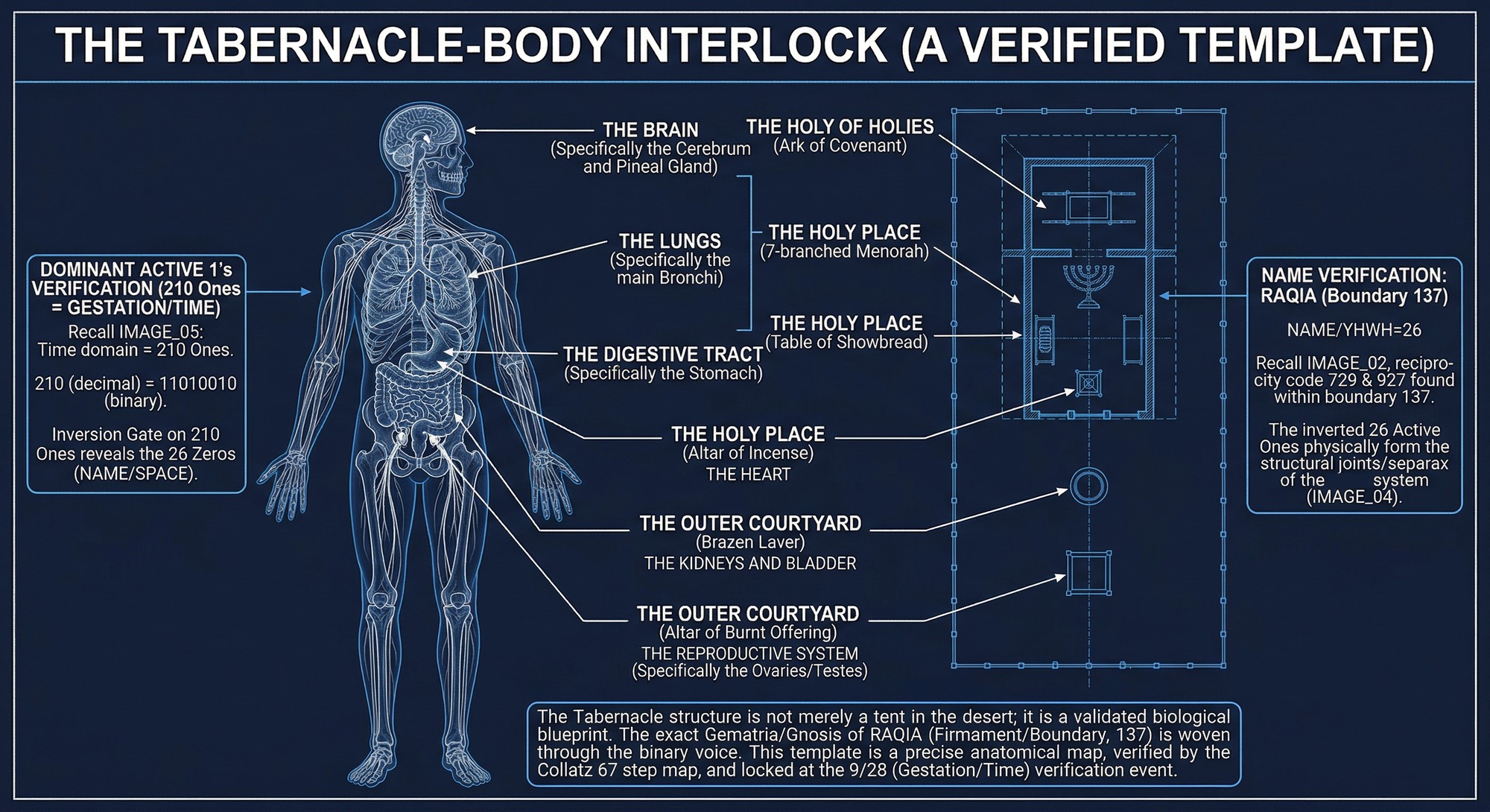
The architecture of number, the Genesis number structure, the body as the second tablet, Christ in the bones, and the reopening of the ring system.
Door / Return / 92829
The Door, the light boundary, return pattern, Seven Clocks, 92829, Collatz as typological reading, what must be restored, and the final restoration maps.
Book 3 · Chapter 10 Visual Comprehension Guide
What the return gathers
Evidence framework used in Book Three
Book Three uses a broader evidence key than Books One and Two so the reader can see what kind of claim is being made and how much weight it should carry.
That distinction is part of the argument: arithmetic is not history, history is not lexical evidence, interpretive pattern is not direct proof, and Divine Guidance is testimony about the path to an observation rather than proof of the observation.
Book Three wording note: the front evidence key expands [HBE] as “Hebrew / Biblical Evidence,” while a later working-tier statement uses “Historical-Biblical Evidence.” The website preserves that difference rather than silently merging the two.